Mar . 10 . 2026
Kidney Cancer Association
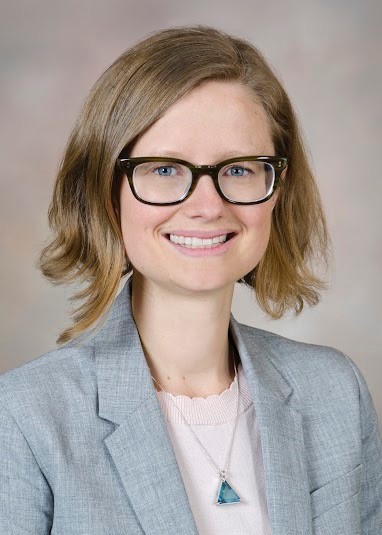
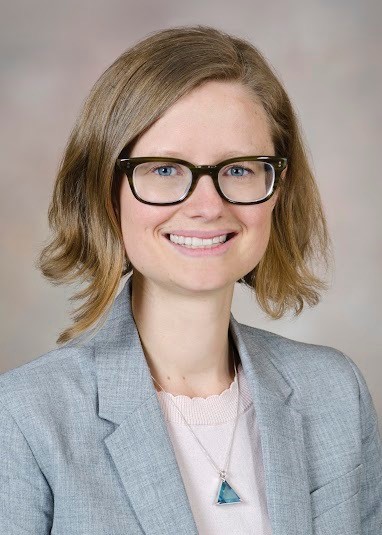
This is a guest post by Alena Guggenheim, N.D., Assistant Professor of Anesthesiology and Perioperative Medicine at the Oregon Health & Science University’s School of Medicine in Portland, Oregon. Dr. Guggenheim was diagnosed with a malignant sarcoma in late 2024 after discovering a large mass on her kidney.
I had been feeling slightly off for a week, a subtle wobble in my vision, a quickening of my heart I couldn’t quite name. Then, one night at 3 a.m., I woke dripping in sweat, with the worst headache of my life. I tried to explain it away as just an atypical migraine, or the beginnings of perimenopause. But when the fevers set in, arriving every afternoon like clockwork, I could no longer dismiss it as something minor. It felt like something was seriously wrong.
I never felt sick enough to justify a trip to the emergency department, so I started smaller, at urgent care. The clinician there (a well-meaning deer in headlights) suspected pneumonia, but the chest X-ray was clear. Two weeks slipped by. On the fifteenth day of fevers, my primary care physician took one look at me, ordered a sweep of labs, and rushed an urgent referral to infectious disease. When the tuberculosis test came back negative, something inside me just knew.
At that point, I did what I had so often watched my patients do: I became my own advocate. Reviewing the algorithm for a fever of unknown origin, I saw the only test I hadn’t had was a whole-body CT scan. So I walked into another urgent care, ready to press for imaging, bracing for the kind of resistance I’d seen my patients encounter when their instincts outpaced the system’s belief. To my surprise, the physician didn’t hesitate. Within thirty minutes, I was in the scanner.
Eager to get home before the fever spiked again, I left before the results came back. That evening, the phone rang. “You just saved your own life,” the doctor said. “There’s a very large tumor in your right kidney. You need to see a surgeon within forty-eight hours.”
A week later, I underwent a radical nephrectomy. My pathology results dropped into my MyChart on a Sunday evening, before my body had learned to brace with each new piece of information. Sarcomatoid renal cell carcinoma. I googled this, having never heard of this cell type. Big mistake! Starting April 5, 2021, the Information Blocking Provision of the Cures Act Final Rule mandated that patients have unencumbered, free access to their electronic records. I was not prepared to have free access. I needed guidance that would have to wait for my first visit with oncology. Unbeknownst to me, my diagnosis was in question behind the scenes. After nearly two months of immunotherapy treatment, it was abruptly changed: malignant PEComa, an ultra-rare and high-risk sarcoma with little data on prognosis or survival. Treatment was stopped and I suddenly entered the vast unknown.
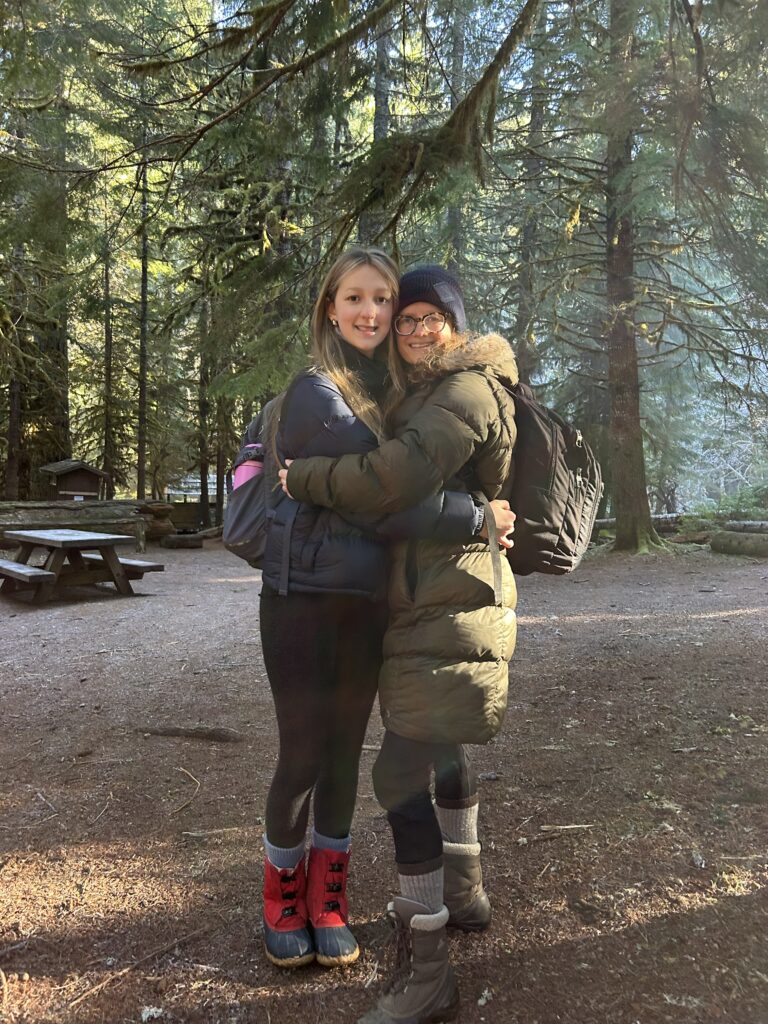
That diagnosis cracked my life wide open. It ushered in some of the hardest days I have ever lived, but also some of the most beautiful. The color of the sky was more saturated, the sound of my kids’ voices sweeter, yet beneath it all, a steady current of anxiety pulsed. In facing this vulnerability, I realized that my patients had been preparing me. For illness, for disability, and for death. Their experiences became a lens through which I began to see my own journey differently.
Becoming a patient did not leave me untethered. To my surprise, I felt a kind of steadiness, even a quiet peace, an anchor I recognize now as the gift of what my patients have been teaching me all along. What unsettled me was not the illness itself, but the machinery of medicine that lurched into motion around me: the endless referrals, the delays, the fragile threads of communication between offices. I found myself caught between two identities, doctor and patient, struggling with the uncomfortable truth of privilege. I knew how to call a colleague, how to nudge a referral, how to get my chart seen more quickly. I also knew that doing so was ethically fraught. In those moments, my family and I leaned on every resource we had, even as I questioned the fairness of it.
If I’m honest, I have learned far more about what it means to be human from my patients than they could ever have learned from me. They have taught me that illness is not failure, that health is not a moral prize, and that dignity exists even in the shadow of uncertainty. They have been my real professors, long before I knew I would need their lessons for myself.
In medical school, physicians are taught that they are the teachers and patients are the students: a hierarchy that can strip patients of autonomy and silence the knowledge they hold about their own bodies. This framing shapes not only how physicians see patients, but how patients come to see themselves. Illness becomes a kind of failure exam, the body a misbehaving pupil. The doctor’s role, then, is to discipline the body back into health, or to chastise when it does not comply.
What this model misses, and what my own illness has illuminated with new clarity, is that learning flows both ways. Patients live inside a terrain that physicians only visit. They hold
expertise in endurance, in improvisation, in making meaning out of uncertainty. If we reduce them to students, we not only diminish them, we diminish ourselves. We stunt our own growth as physicians by cutting ourselves off from one of the richest sources of wisdom available to us.
I now recognize that my patients have been my real teachers and taught me how to be a person within the confines of a fragile body. These are 6 lessons no textbook could offer.
Lesson 1: Illness is Not a Failure
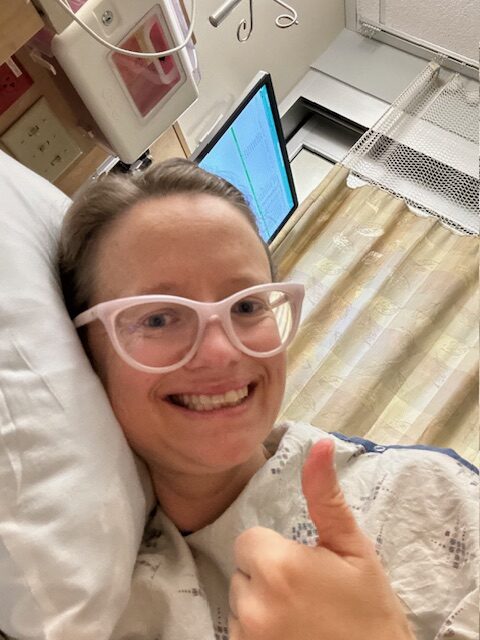
When I was first diagnosed, well-meaning friends offered comfort with lines like, “You of all people don’t deserve this,” or, when a scan came back clear, “Of course it did! You take such good care of yourself.” Meant to reassure, these comments revealed something more troubling: the notion that health is earned, and that illness is a sign of failure.
The idea that illness is the body’s punishment for bad choices isn’t new, but it has gained fresh traction in our cultural moment. You hear it in the “Make America Healthy Again” rhetoric, where health is framed as a patriotic duty and a measure of individual discipline and therefore morality. You see it in the booming integrative and wellness industries, obsessed with finding the “root cause.” The story is always the same: eat the right food, optimize your hormones, heal your trauma, fix your gut microbiome, and you can protect yourself from illness. Health is presented as a solvable equation, a reward for those who work hard enough or spend enough money on supplements and protocols. And if health can be worn like a badge of honor, then illness must be worn like a dunce cap.
But this narrative is not only false, it is cruel. It ignores what patients have taught me repeatedly: the body is not a simple ledger of choices. It erases the influence of social determinants of health, the violence of structural racism, and the lifelong physiological toll of oppression. Dr. Arline Geronimus calls this “weathering”: the way marginalized bodies literally carry the biological scars of chronic stress, discrimination, and poverty. Hypertension, diabetes, premature births, shortened life spans. These are not the result of personal failings, but of systems grinding people down over time.
And yet, the obsession with personal responsibility endures. In both conventional and alternative medicine, we tell patients, explicitly or not, that if only they made better choices,
they would be well. This does not heal; it shames. And shame is not neutral: it is corrosive, biological, inflammatory. It compounds suffering.
My patients have taught me that our worth cannot be tethered to our physical condition. All bodies are, in some way, flawed. To be human is to be breakable. To suggest otherwise is to dehumanize those living with illness and disability and to deny the reality of our own mortality.
Lesson 2: Valid Illness Privilege is Real
With a cancer diagnosis, I was ushered into a kind of privilege I had seen but never fully grasped until it became my own. Suddenly, my calls were answered on the first ring. Nurses and physicians returned my messages within hours. Every concern I raised was met with urgency and seriousness. In oncology, doors opened.
It was not lost on me that many of my own patients living with invisible illnesses such as long COVID, ME/CFS, dysautonomia, and Ehlers-Danlos Syndrome experience the opposite. Their conditions leave them profoundly debilitated, in many ways more functionally impaired than I have ever been. Yet their suffering is often minimized, their needs dismissed, their diagnoses doubted. They live in the liminal space of the “invalid” diagnosis: too vague, too contested, too poorly understood to command authority within the system.
I work in a comprehensive pain center at a major academic medical institution. Just months before my diagnosis, all our integrative providers (acupuncturists, chiropractors, massage therapists, Rolfers) were dismissed despite our department chair’s advocacy. The reasoning was simple: pain patients can access these services elsewhere. Then, at my very first oncology appointment, I was handed an internal acupuncture referral. The message was unmistakable: some patients are deemed worthy of supportive services, and others are not.
The difference isn’t the level of suffering. It’s belief. Cancer is legible to the medical system: it fits neatly into scans, pathology reports, survival curves. Conditions like chronic fatigue, widespread pain, or dysautonomia resist those categories. As a result, we create hierarchies of legitimacy, validating the visible and measurable while leaving the invisible to fend for themselves.
But illness does not need to be believed to be real. My patients have shown me this repeatedly: their lives are shaped not only by disease, but by the disbelief of those around them. The relentless effort to prove one’s reality takes its own toll: psychological, physiological, spiritual. In many ways, disbelief becomes a second illness layered atop the first.
I often think of a patient I cared for over five years. In her early fifties, living with Ehlers-Danlos syndrome and chronic pain, she was an artist, musician, and devoted mother. Years of gastrointestinal symptoms were labeled as irritable bowel syndrome. When her symptoms shifted she was afraid to seek care again. “I just couldn’t face being told it was all in my head again”. What she truly feared was being dismissed, judged for asking again after so many “normal” tests. Years of encounters had taught her that seeking care often meant facing disbelief and disinterest, the kind of clinician-associated traumatization explored by Colin Halverson in his narrative studies of patients with Ehlers-Danlos Syndrome. By the time she was finally diagnosed with ovarian cancer, it had already metastasized. She died a year later.
This was not an inevitable death. It was, in every sense, preventable. What killed her was not only cancer, but disbelief. The system had taught her that her voice carried little weight, that her suffering was suspect. She delayed seeking care not for lack of insight or courage, but because she had learned that asking for help could bring further harm. The tragedy lies in a medical culture where some illnesses are deemed more valid than others.
Lesson 3: Sickness is Social
These individual struggles point to something larger: the way society itself shapes illness. It would be easy to frame stories like hers as failures of individual doctors. But the truth is broader and more unsettling: our healthcare system is not built to listen to patients like her. It is shaped by larger forces such as capitalism, ableism, racism, paternalism, that consistently devalue the sick, the disabled, the poor, and the marginalized.
We are surrounded by systems that make it harder to care for one another. Systems that insist our bodies are solely our responsibility while ignoring the structural forces that carve sickness into flesh: unsafe housing, polluted air, lack of access to healthy food, poverty wages, chronic exposure to discrimination and violence. As a society, we often refuse to acknowledge these social determinants of health because to do so would force us to confront the human toll of the systems we uphold. It is easier to blame individuals for their illness than to face the truth that
oppression itself is pathogenic.
Trauma illustrates this tension with painful clarity. Its imprint on the body is undeniable, yet the conversation often shifts to individual responsibility: “Do your trauma work,” we say, as if healing depended solely on grit or self-care. Rarely do we name the systems that keep inflicting wounds. Racism, misogyny, homophobia, transphobia, poverty, the slow violence of colonialism and war. Trauma lives not only in individual nervous systems but in collective ones. Treating it only at the individual level misses the deeper pathology: the society that produces and reproduces it. If we are serious about health, we must be serious about dismantling the systems that make people sick in the first place. If physicians and systems paid as much attention to patient narratives as we do to tests and scans, many of these paradoxes and injustices could be mitigated.
Lesson 4: Appearance Matters in Medicine
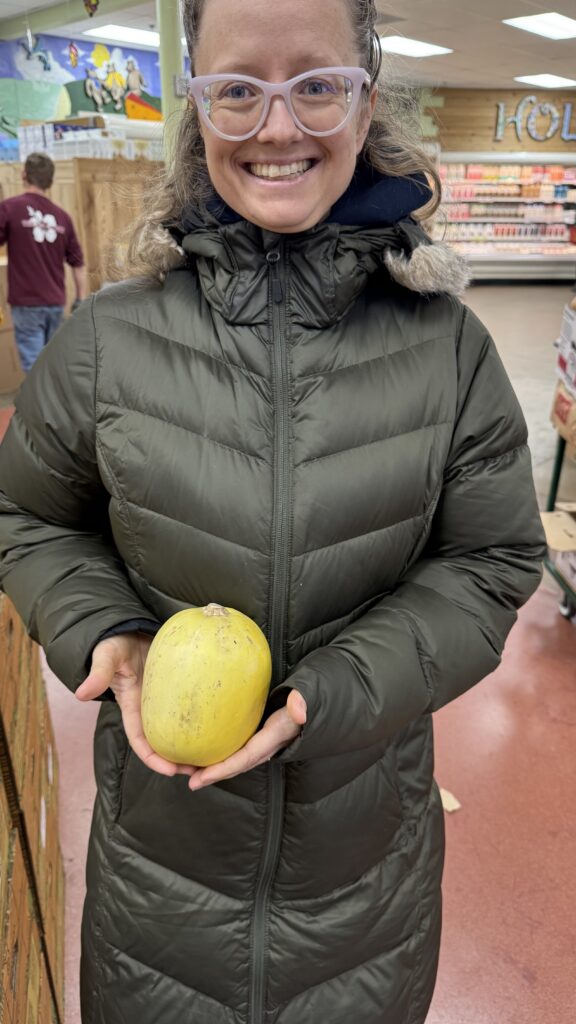
Before my first surgical consult, I remember standing in front of my closet, trying to decide what to wear. I caught myself wondering, what does a cancer patient look like? I thought about what would signal that I was serious, compliant, worthy of care. Would jeans make me seem too casual? Would a necklace feel like overkill? Even as a physician, I found myself rehearsing not only what I would say, but how I would present my body and story. I hadn’t realized until that moment just how much labor goes into the performance of being a patient.
I know this story is not mine alone, and my experience was blunted by “valid diagnosis privilege” in action. For those navigating care without this benefit, there can be an exhausting calculus for preparing for visits. If you arrive too put-together (hair neat, makeup done, clothes tidy) you risk having your symptoms discounted: How sick could she really be? But if you show up in sweats, hair unwashed, face pale with fatigue, you risk another kind of dismissal: She looks depressed. The margins for being believed are narrow, and patients learn quickly that how they appear can matter as much as what they say.
This performance is not harmless. It drains energy from bodies that are already stretched thin. It layers shame and anxiety on top of illness: Will they believe me if I look like this? Should I have tried harder? Am I presenting myself the right way? Over time, the body itself becomes suspect, a stage that must be managed, curated, disciplined. Performing “the right kind of sick” becomes part of the illness, an invisible second job that few clinicians acknowledge.
The pressure to look the part is not distributed equally. Medical culture is steeped in stereotypes about what “real illness” looks like, and those stereotypes are shaped by race, class, gender, and ability. A white professional woman might be read as credible in the same outfit that marks a woman of color as “noncompliant” or “disheveled.” Patients who are poor, disabled, or otherwise marginalized face even narrower margins for legitimacy. Respectability politics do not stop at the clinic door; they shape who is heard, who is doubted, and who is dismissed.
Even with all my knowledge of the system, and all the privilege that buffered me, I still felt the pull to prove myself with appearance. If I felt that pressure as a physician-patient with a cancer diagnosis, I can only imagine the weight it places on those with contested conditions, invisible disabilities, or stigmatized diseases. For them, the performance never ends.
What my patients have taught me is that showing up, in any state, is an act of courage. They remind me that authenticity should not have to be performed in order to be recognized as real. Every visit, every story shared, is a testament to resilience. Perhaps not in the polished way medicine often demands, but in the raw, human truth of simply continuing to ask for care. That recognition is its own kind of medicine, one I carry with me now each time I step into an exam room, whether as doctor or as patient.
Lesson 5: The Patient Paradox Is Real
Even when patients manage to perform illness in ways that medicine recognizes, they are still caught in contradictions, praised for vigilance one moment, punished for it the next. Perhaps the hardest reality is the no-win position my patients so often occupy. They are told they are overfocused on their symptoms. Too anxious, too vigilant, catastrophizing. Yet when diagnoses come late or disease progresses unchecked, they are blamed for waiting too long. Patients are scolded for being too informed, for “reading too much online,” yet if they seem less knowledgeable, they are dismissed as disengaged, unmotivated, or noncompliant. They are told to trust their bodies, only to be warned that their sensations are deceptive—somatization, anxiety, exaggeration. “Trust us,” the system says, even as it repeatedly proves itself untrustworthy.
This dichotomy is not just frustrating, it is destructive. It teaches people to doubt their instincts, to gaslight themselves before anyone else can. It fosters the belief that their bodies are dramatic,
adversarial, even dangerous. And yet, for many, these same bodies are their only compass through uncertainty.
Living with illness requires radical discernment: noticing what is signal and what is noise, what is danger and what is the hum of a nervous system worn thin by stress. My patients have shown me there is no simple formula, no neat algorithm. What exists instead is practice: paying attention, recalibrating, trying again. It is slow, humbling work—and it deserves recognition as the expertise it truly is.
When my own cancer symptoms started, I remembered the countless conversations I have had with patients to listen, pay attention and act. Thank goodness I had learned to do the same for myself.
Lesson 6: Your Needs Are Valid
One of the patterns I have come to notice is how often patients apologize. Almost every visit begins with a small act of self-effacement: “I’m sorry to bother you, but… I hate to take up your time… I know you’re busy, but could I ask for…” These apologies are often attached to the most basic requests such as referrals, paperwork, or letters for work or disability, and sometimes even when a therapy has not improved their symptoms, as if their body’s stubbornness were a personal failure. I avoid the phrase “treatment failure” for this reason: it implies someone, usually the patient, has failed. Medicine’s language carries a hierarchy of worthiness that patients feel in their bones.
Patients also feel like their emotions are “too much” to bring into a visit. This belief is often reinforced by past experiences such as times when crying made a provider visibly uncomfortable, or worse, when their physical symptoms were dismissed as nothing more than anxiety or depression. Over time, many learn to present their stories calmly and robotically, rehearsing their words to avoid vulnerability. Any crack in composure can feel like failure, another sign that they are not being a “good patient.” It is profoundly difficult to bare one’s emotional truth in front of a relative stranger, especially when one has been hurt by doing so before. Much like the over-apologies patients give for needing care, they also apologize when emotion escapes. I find these moments to be sacred—an invitation to pause, to acknowledge not weakness, but humanness, and to thank them for the courage of letting it show.
What these constant apologies reveal is not individual insecurity but the lessons patients have absorbed from the system itself. We have unintentionally taught them that we prefer the patient who needs less and asks for little. Patients learn to shrink their requests, to package their needs as neatly and unobtrusively as possible, for fear of being labeled difficult. Yet the truth is that their needs are not excessive. They are human.
My patients have shown me that asking for care should not require an apology. That seeking help is not a weakness but a form of courage. And that the real failure lies not in the patient whose body resists treatment, but in the systems that ration dignity, making people believe they are too much simply for existing in a body that requires care.
The Lessons I Carry
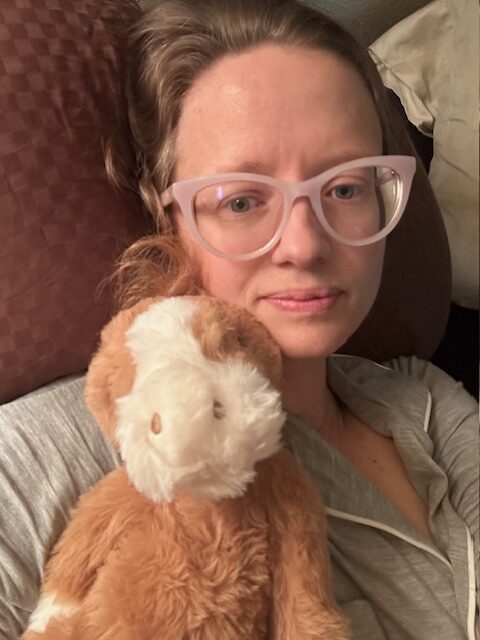
Cancer is hard enough without the added burden of shame. Yet so many of us are taught that illness is our fault: if we had eaten better, exercised more, or managed stress, we might have been spared. I am profoundly grateful that my patients freed me from that trap before I faced this diagnosis. Carrying these lessons forward, I aim to listen more deeply, advocate more intentionally, and create space in my practice for patients to be seen fully, without having to perform, justify, or shrink themselves.
As I navigate life with a rare sarcoma, I am spared the corrosive spiral of self-blame. I do not lie awake wondering what I did wrong or imagining alternate lives where this never happened. My patients taught me that disease is not moral failure. Bodies falter not because we are careless, but because we are human. This lightness, free from shame, is itself a form of medicine. It may improve outcomes, perhaps even survival, but more importantly, it allows me to inhabit this body with gratitude instead of resentment.
I also want to name the privilege shaping my path: a white body, wealth, education, and a professional title that grants me access to care, compassion, and publication. These advantages elevate my voice in ways not afforded to many patients, especially those living at the intersections of multiple marginalized identities. My hope is that this essay serves as an opening for the stories of those most often silenced. My patients, particularly those who have had to fight to be believed, remain my greatest teachers.
What they have given me is not just the knowledge to care for others, but the resilience to care for myself. They have taught me how to face illness, disability, and death not as failures, but as part of the human story. For that, I carry them with me, every step of the way.