Psychedelics for Serious Illness: An update on the state of science for psychedelics, and what all clinicians should know as they enter this uncharted territory.

An update on the state of science for psychedelics, and what all clinicians should know as they enter this uncharted territory.
Articles about psychedelic treatments for persistent depression, PTSD, and substance use disorder seem to be everywhere. Rarely a week goes by without a newly published study appearing in a peer-reviewed medical journal, usually followed by reports of the study in prominent news outlets.

Anyone born after 1970 may find themselves wondering, “What’s going on?” Until recently, psychedelics seemed to be artifacts of a bygone era of anti-war protests, hippies, Hair, and classic vinyl.

Here’s what you need to know.

1. These drugs have a long history.

Psychedelics actually have a long history. Archaeological evidence shows that early humans ingested specific plants and mushrooms, which produce chemicals with psychedelic properties. For millennia, indigenous people in Asia, Central and South America have used experiences induced by psychedelics as central components of sacred ceremonies. Western medicine’s examination of these drugs dates to the synthesis of LSD (lysergic acid diethylamide) in 1938 by Albert Hoffman, a Swiss chemist working for the Sandoz pharmaceutical company. Hofmann had been researching vasoactive compounds and initially set aside LSD. In 1943 he inadvertently absorbed some of the chemical transcutaneously and had the first LSD-induced psychedelic experience.

Recognizing its intense psychic properties, Sandoz offered LSD to psychiatrists who were interested in exploring its therapeutic potential. From 1950 through early 1970s, licensed physicians could administer or prescribe LSD to patients. Research flourished in the form of bench science, case studies and small, non-randomized trials. Before falling victim to the excesses and cultural-political tensions of the era, more than 1,000 articles about psychedelics were published in the medical literature. Then the Nixon administration reclassified psychedelics as Schedule I drugs, signifying high potential for abuse and no legitimate use. Research ceased.

But seeds had been planted in the minds of a handful of clinicians and investigators. Early in the present century the FDA granted permission to researchers at UCLA, NYU, and Johns Hopkins universities to conduct small, well-designed trials of psilocybin-assisted therapy. Consistent with previous findings, a large majority of patients with cancer and concomitant depression or anxiety demonstrated substantial improvements on standard scales. Notably, these benefits were often sustained through months of follow up. Publication of these studies ushered in the current renaissance of psychedelic-assisted therapies.

Read Full Article

Latest Blog Posts

6 Lessons From My Patients, Who Prepared Me for Cancer

6 Lessons From My Patients, Who Prepared Me for Cancer

Mar . 10 . 2026 Kidney Cancer Association This is a guest post by Alena Guggenheim, N.D., Assistant Professor of Anesthesiology and Perioperative Medicine at the Oregon Health & Science University’s School of Medicine in Portland, Oregon. Dr. Guggenheim was diagnosed with a malignant sarcoma in late 2024 after discovering a large mass on her kidney. I had been feeling slightly off for a week, a subtle wobble in my vision, a quickening of my heart I couldn’t quite name. Then, one night at 3 a.m., I woke dripping in sweat, with the worst headache of my life. I tried to ...

Read More
Welcoming Dr. Rachel Caplan-Erickson, ND, LAc to AIMS Institute

Welcoming Dr. Rachel Caplan-Erickson, ND, LAc to AIMS Institute

Integrative Primary Care | Root-Cause Medicine | Whole-Person Healing We are honored and delighted to welcome Dr. Rachel Caplan-Erickson, ND, LAc to the AIMS Institute team. With over 14 years of clinical experience, Dr. Rachel brings a deeply integrative, root-cause approach to primary care that bridges modern diagnostics with time-honored healing traditions. Her work embodies what AIMS Institute stands for: comprehensive, compassionate, whole-person medicine. A Truly Integrative Approach to Primary Care Dr. Rachel is a licensed naturopathic physician and acupuncturist who provides comprehensive primary care through a uniquely integrative lens. She combines advanced laboratory testing and modern medical diagnostics with ...

Read More
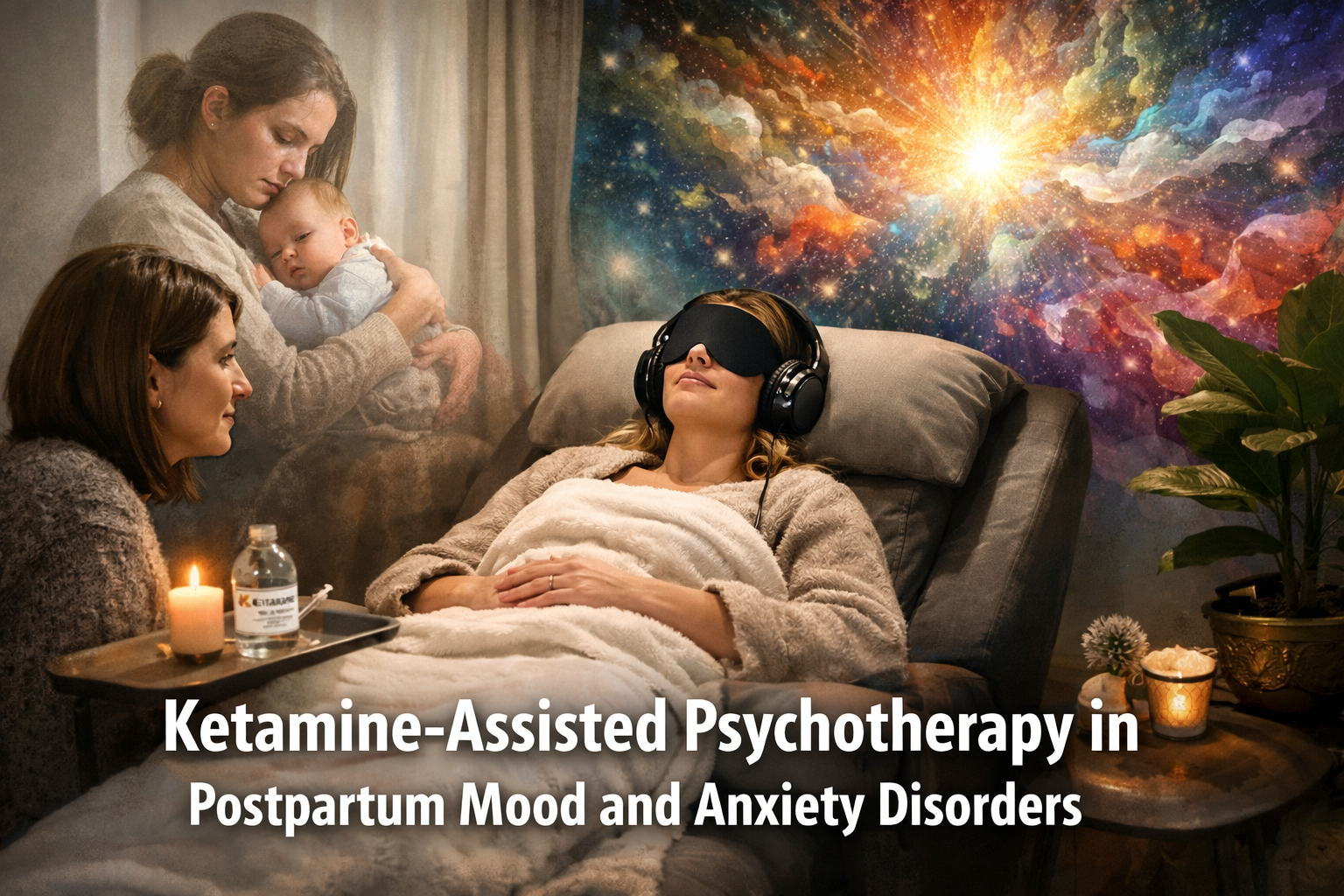
Ketamine assisted psychotherapy in postpartum mood and anxiety disorders: a limited case series

Ketamine assisted psychotherapy in postpartum mood and anxiety disorders: a limited case series

Alka Christnacht1Therry Rose Eparwa1,2Emily Whinkin2*Sunil Aggarwal2,3 The postpartum period is notorious for rapid and profound changes for birthing individuals and their families. Significant shifts to hormonal and physical health, routines and family roles, and the salience of personal and community risk factors all contribute to potential psychiatric and psychological distress for parents, sometimes diagnosed as a postpartum mood or anxiety disorder (PMAD). Existing pharmacologic treatment modalities for PMADs do not comprehensively address the profound shifts of the postpartum period, often inadequate at reaching peak therapeutic efficacy in a shorter time frame, in patient accessibility, or offering sustained benefit. Ketamine assisted ...

Read More

Accessibility Tools

Increase TextIncrease Text
Decrease TextDecrease Text
GrayscaleGrayscale
Invert Colors
Readable FontReadable Font
Reset
Call Us Text Us