Alka Christnacht1Therry Rose Eparwa1,2Emily Whinkin2*Sunil Aggarwal2,3
- 1College of Nursing, Seattle University, Seattle, WA, United States
- 2Advanced Integrative Medical Science Institute (AIMS) Institute, Seattle, WA, United States
- 3University of Washington, Department of Geography, Seattle, WA, United States
The postpartum period is notorious for rapid and profound changes for birthing individuals and their families. Significant shifts to hormonal and physical health, routines and family roles, and the salience of personal and community risk factors all contribute to potential psychiatric and psychological distress for parents, sometimes diagnosed as a postpartum mood or anxiety disorder (PMAD). Existing pharmacologic treatment modalities for PMADs do not comprehensively address the profound shifts of the postpartum period, often inadequate at reaching peak therapeutic efficacy in a shorter time frame, in patient accessibility, or offering sustained benefit. Ketamine assisted psychotherapy (KAP), is increasingly recognized as a therapeutic option for a range of psychiatric disorders and has been explored as a modality to prevent PMADs when used during Cesarean births. This retrospective case series examines three cases where ketamine assisted psychotherapy (KAP) was introduced during the first two years postpartum as part of a comprehensive treatment plan for PMADs. This study describes the utility of ketamine assisted psychotherapy to the postpartum individual, and offers perspective on the impact of psychedelic insights through treatment of PMAD symptoms
Introduction
Postpartum mood and anxiety disorders (PMADs) is a term used to describe mental illnesses that occur around the postpartum period. The criteria for PMADs vary. The Diagnostic and Statistical Manual of Mental Disorders, 5th edition text-revision (DSM-5-TR; 2) simply adds the specifier ‘with peripartum onset’ to encapsulate a mood disorder that begins either in pregnancy or postpartum. However, many prominent organizations define PMADs as starting within the first several weeks following childbirth and occurring up to a year following childbirth (2–4). PMADs affect nearly 1 in 5 (5), often being accompanied by profound physical and life changes for the birthing individual as well as the child and family system. PMADs may increase the risk of adverse physiological and psychological health outcomes such as suicide, a leading cause of maternal death in the perinatal period within the United States (6, 7). PMADs are associated with lower initiation rates for breastfeeding, which can lead to poorer maternal-infant bonding (8). Effects of PMADs on children include increased morbidity and mortality rate; delays in cognitive, motor, emotional, and language development (8); and delays in communication and personal-social development (9). PMADs can have a reciprocal relationship with paternal mental health. The risk of depression nearly doubles in the postpartum period for fathers, with a quarter to half of fathers experiencing paternal depression if their partner is experiencing a PMAD (10), and poor paternal mental health can often be a risk factor for PMADs (11).
Social and psychological risk factors for PMADs include a history of prenatal mood and/or anxiety disorders, high stress or trauma (exposure to life-threatening events), lack of social support, lack of spousal/partner support, immigration or lack of acculturation, and low socioeconomic status (SES). Biological and genetic risk factors include gestational diabetes, increased inflammatory mediators, abnormal neuroendocrine hormone function, and epigenetic changes. Birthing experiences themselves may also precipitate PMADs as negative birth experiences, multiple births, and preterm deliveries have been associated with PMADs (12, 13).
The pathophysiology of PMADs may differ compared to mood and/or anxiety disorders during other periods of life. These emerging findings must be approached with some temperance, as many are derived from single studies. Stress and dysregulation of the hypothalamic-pituitary-adrenal (HPA) axis can play significant roles in triggering depression both in and out of the peripartum period (14). Neurological changes observed in both postpartum depression (PPD) and major depressive disorder (MDD) include decreased activation of reward circuitry, reduced binding of serotonin receptors, and decreased activity of gamma-aminobutyric acid (GABA) (14). In a mice model where PMADs was replicated by maternal separation and early weaning, reduced vesicular transport of GABA and glutamate resulted in increased despair- and anhedonia-like behaviors and disrupted maternal care (15). Specific to PPD is that the amygdala, commonly known as the fear center of the brain, has a blunted response to negative stimuli (16, 17), whereas in MDD the response is typically heightened (18).
Hormonal changes during pregnancy and childbirth may lead to epigenetic changes that increase the risk for PMADs (19). Estrogen-dependent changes are associated with PMADs (14, 20), with lower levels of estradiol correlated with depression and anxiety. Homozygous short alleles for the serotonin transporter gene (SERT) are linked to larger drops in estradiol following childbirth, raising the risk of postpartum depression at 6 weeks (21). Although estradiol naturally declines following childbirth, greater precipitous declines are associated with decreased synaptic plasticity and brain-derived neurotrophic factor (BDNF) expression (22). Circulating levels of the neurosteroid allopregnanolone increase dramatically during pregnancy and drop precipitously following childbirth (23). Allopregnanolone positively modulates GABA-alpha (GABA-A) receptors in the brain (24), producing anxiolytic and antidepressant effects. Individuals with PMADs show low serum levels of allopregnanolone in late pregnancy (15) and it is thought that the upregulation of GABA-A receptors following childbirth does not occur (25).
Current treatment options for PMADs are often generalized from standard depression protocols (e.g., selective serotonin reuptake inhibitors (SSRIs); serotonin-norepinephrine reuptake inhibitors (SNRIs)) and can take several weeks to achieve full efficacy (26). Further, treatments provided during this period must take into account that any drug given to individuals who are lactating must also demonstrate a level of safety for infants (27). Unfortunately, there are limited approved PMAD-specific pharmacologic treatment options that alter neuroactive steroid and hormone levels (28). Thus far, synthetic allopregnanolone-based treatment (e.g., brexanolone and zuranolone) addresses the neuroactive steroid fluctuation seen in PMADs and has demonstrated positive results (29, 30). However, they currently remain inaccessible for many due to time and/or financial barriers. Additionally, manufacturer recommendations advise suspending breastfeeding during treatment, which impacts maternal-infant bonding. In its early phases of study for PMADs, estradiol treatment has demonstrated safety in lactation; however, its efficacy is unclear, it may decrease milk supply, and carry the risk of thromboembolic events (31). Given the potentially serious implications that PMADs can have on families it is crucial to identify alternate pharmacologic treatments that can be utilized for this unique subset of psychiatric disorders. Ketamine has shown a range of therapeutic benefits in various psychiatric and mental health disorders (32).
A dissociative anesthetic, ketamine is listed as an essential medicine by the World Health Organization (33). It is highly lipid-soluble with a low protein-binding affinity (20-50%) (34), allowing it to readily cross the blood-brain barrier. This leads to a rapid onset of action and a short half-life of 1–3 hours (35). Such swift elimination of ketamine from the system reduces the duration of drug side effects as well as excretion of the drug in breast milk. Although unrelated to the rapid pharmacokinetics, ketamine additionally is known to provide therapeutic relief for mental health symptoms faster than traditional antidepressants which may take 4–6 weeks for full efficacy (36). The rapid elimination from breast milk is particularly beneficial in individuals with PMADs, facilitating a quicker return to ability to lactate, and support parent-child bonding during a critical period for neurobiological regulation and attachment development (37). In order of decreasing bioavailability, ketamine can be administered intravenously (IV), intramuscularly (IM), intranasally (IN), sublingually (SL), or orally (PO) (34, 38). Its metabolism primarily occurs in the liver, and metabolites are excreted in the urine (34).
The exploration of ketamine’s psychiatric potential began in the 1970s. Landmark studies, such as Khorramzadeh and Lotfy (39), demonstrated that ketamine injections led to remission of various psychiatric symptoms, lasting up to a year, in approximately 100 participants with diverse psychiatric diagnoses. Since then, promising results have emerged from studies investigating ketamine for a range of psychiatric disorders. While ketamine is recognized as a non-competitive antagonist of postsynaptic glutamatergic N-methyl-D-aspartate receptors (NMDAR) (40), the exact mechanisms behind its rapid and sustained antidepressant effects remain unclear. This is evidenced by the inconsistent antidepressant effects observed with other NMDAR antagonists, such as memantine (41, 42). Ketamine’s immediate effects disrupt downstream cellular processes, including gene expression and protein regulation (43). It is proposed to block tonic GABAergic inhibition, increasing glutamate release and cycling, which heightens glutamate transmission into alpha-amino-3-hydroxy-5-methyl-4-isoxazolepropionic acid receptors (AMPARs), activating BDNF protein synthesis and synaptogenesis (44). Lower BDNF levels are correlated with depression, while higher levels promote neuroplasticity (45). Ketamine may exert anxiolytic and antidepressant effects in PMADs (46) by respectively enhancing infralimbic cortex and hippocampus synaptic plasticity and synaptogenesis (15, 33, 47). Ketamine might outperform allopregnanolone synthetics in treating PMADs since synthetic allopregnanolone only reduced behaviors of despair, but ketamine also reversed anhedonia (15), though further studies are needed.
Ketamine potentially has utility as a prophylactic, particularly for PPD, given its frequent anesthetic administration for surgical procedures and rapid, effective antidepressant qualities. Administered at 0.2-0.5 mg/kg IV during or after caesarean sections, sub-anesthetic doses of ketamine generally reduced depression rates 48 hours to 6 weeks postpartum (37), with higher doses leading to even lower depressive symptoms. By contrast, another study found that doses ≥ 0.5 mg/kg of IV ketamine reduced the scores and prevalence of PPD symptoms at 1 week postpartum; however, it was ineffective at maintaining antidepressive effects at 4 weeks postpartum (48). These varied outcomes may be influenced by an individual’s risk probability for a PMAD. Compared to placebo, high-risk birthing individuals who received IV ketamine (0.5 mg/kg) 10 minutes post-delivery had significantly reduced incidences of PPD (13). Moreover, there were no significant differences observed within the low-risk group, and a few individuals still developed PPD.
Ketamine is generally considered a safe medication with a favorable tolerability profile. Its side effects are typically acute and mild, including nausea, vomiting, dizziness, headache, sedation, transient hypertension, blurred vision, agitation, anxiety, and dissociative symptoms (47, 49). Early studies also indicate safety during lactation, where Wolfson et al. (50) found that the relative infant dose (RID) of ketamine, after IM administration of 0.5 mg/kg and 0.1 mg/kg to women, never exceeded 1% when serum metabolites were measured every three hours for up to 12 hours. RID, which measures the proportion of mg/kg/day of the drug received by the infant relative to the lactating individual’s dose, is considered safe at levels up to 10% (51). Given ketamine’s poor oral bioavailability in adults, it was hypothesized that even less would transfer to infants via lactation (50). Regardless, due to limited data, close monitoring of infants consuming milk from lactating individuals receiving ketamine is recommended (52).
Beyond pharmacologic and physiologic effects, additional benefits may arise from ketamine’s experiential effects. Sub-anesthetic doses of ketamine have shown the ability to induce “mystical-type” experiences. These experiences are comparable to spontaneous or “spiritual” phenomena, often characterized by ineffability, metaphysical insight, positive affect, and a heightened sense of connection with the world and others (53–55). Additionally, ketamine’s mood-elevating and antidepressant benefits are prolonged when combined with subsequent psychotherapy, as occurs in ketamine-assisted psychotherapy (KAP) (30, 47, 56).
Despite ketamine’s emergence as a potential treatment option and prophylaxis for certain mood disorders, there is limited literature on its clinical use and coverage for individuals with PMADs. This scarcity may be attributed to a lack of funding or hesitancy to study medication during the perinatal period. Because there are multiple causative agents and circumstances that increase susceptibility to PMADs, each case is unique. Treatment for PMADS must address the distinct physical and psychological concerns of each individual. Multiple mutually-reinforcing causes of PMADs also confers multiple inroads for possible treatments, which are most appropriately utilized as an integrated protocol of best practices across disciplines. It is within this framework of individualized and integrative care that the patients included in this series received adjunctive ketamine assisted psychotherapy for their PMADs symptoms.
Methods
This study aims to examine a limited number of existing cases of ketamine use in PMADs to gather information regarding its potential benefits, safety, and tolerability as a psychiatric and psychological intervention for this population and the family systems of which they are a part.
Setting and interventions
The Advanced Integrative Medical Science Institute (henceforth, AIMS) in Seattle, WA, offers private, holistic ketamine therapy for mood disorders and other indications. Most patients seen at this clinic are from the greater Seattle metropolitan area. However, there are some out-of-state patients due to the available hotel partnerships and telehealth appointments for screening, preparation, and integration.
A medical provider performs a thorough medical and psychiatric history and evaluation of the patient prior to ketamine treatment. Contraindications include ketamine allergy, severe renal/hepatic illness, high cardiac risk requiring cardiac monitoring, psychosis history, poorly controlled bipolar disorder, or ketamine/illicit substance use disorder, though exceptions exist for alcoholism, gambling/sex, and nicotine addictions with KAP. Poorly processed PTSD may also be a contraindication.
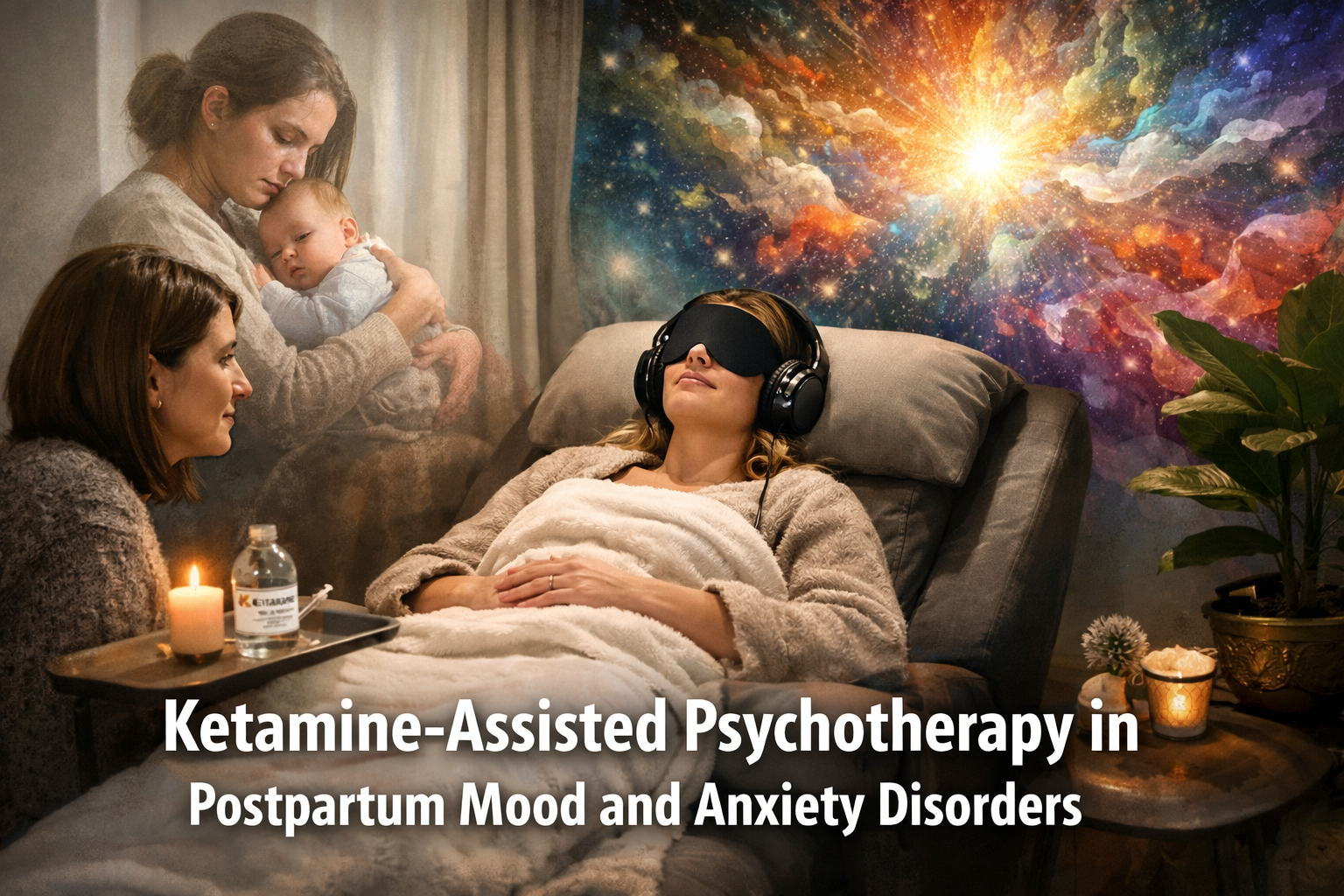
In-clinic KAP protocols require 4-hour fasting, restroom use before the session, and arranged transport home. Vital signs are taken by an RN prior to the session, but no further cardiac monitoring occurs. Prophylactic anti-nausea medication is optional. The patient sits in a recliner and can choose to have relaxing music and wear an eye mask. A starting ketamine dose is typically 1.5 mg/kg IM or 300 mg SL. In consideration of patient tolerance, medical history, medication interactions, medical indication, or previous psychedelic experience. Doses are increased approximately 0.1-0.2 mg/kg IM or 50–100 mg SL per session until full therapeutic benefit is attained. A licensed mental health clinician observes for 2–3 hours during the dissociative “experiential session,” transcribing actions. At-home KAP uses 300 mg SL ketamine troches, where the patient is encouraged to mimic clinic protocols. In lactating patients, patients are recommended to pump and discard breastmilk for 12 hours post-administration. Within a week of KAP treatment, the patient participates in psychotherapy “integration sessions” to review in-clinic notes and process the experience.
Participants
The AIMS Medical Outcomes Study (AMOS, NCT04512755; 57) is an observational prospective outcomes study overseen by the Seattle University Institutional Review Board (IRB). Participants for this study were selected using a convenience sampling with the following inclusion criteria: consented to participate in the AMOS study; were seen at AIMS between November 2019 and December 2023; self-reported struggles with a postpartum-related mood and/or anxiety disorder; received a diagnosis of a mood or anxiety disorder; and prescribed ketamine. Any individuals who did not meet all of these criteria were excluded. One individual who did not consent to AMOS but instead gave verbal consent, documented in her medical record, for her outcomes to be used as part of research on peripartum health met all other clinical criteria and was included in the study.
The postpartum period was not restricted to 12 months following childbirth, which is the frequently-described postpartum timeframe. Extant literature indicates that postpartum depressive symptoms can persist and remain elevated for as long as 3 years (57). As the study was anticipated to have a limited sample size, the postpartum timeframe was extended up to 24 months to gather all potentially available data.
Participants were identified via AIMS’ electronic medical record (EMR) system. The EMR analytics enabled a refined search of potential subjects through using specific search terms and diagnostic International Classification of Diseases, 10th revision (ICD-10) codes relevant to PMADs. Individuals were flagged if any of the following diagnoses were explicitly included within their health record: MDD, single episode, unspecified postpartum depression (F32.9); postpartum mood disturbance (O90.6); or postpartum depression (F53.0). The ‘diagnosis contains’ search feature flagged individuals whose diagnoses contained the term “postpartum” or “pregnancy.” Provider recall was also solicited by internal email communications and during a morning huddle to further identify any individuals who may have PMADs.
Data collection and analysis
Participant information was collected from the EMR and stored on a spreadsheet database, which included: participant identifier, age, marital status, date of delivery, psychiatric diagnoses, medications, and notable medical and/or obstetric history. Any ketamine-related clinical encounter documented by medical providers and licensed mental health clinicians was reviewed to gather appointment dates, narratives detailing PMAD symptoms, response to ketamine treatment, and any effects. The number of appointments and length of treatment for participants significantly varied, depending on whether or not they continued to identify PMADs as a concern. There is no standardized documentation method, thus documentation style, the amount of detail, and the use of direct patient quotes remarkably varied.
Results
Demographics
Between November 2019 and December 2023, 14 patients endorsed having PMADs while being seen at AIMS, of which N = 3 (21.4%) met the inclusion criteria. Exclusion was primarily due to non-enrollment in the AMOS study. Table 1 shows participants’ demographics and characteristics. Notably educational data was not available.
Table 1
Table 1. Participant demographics and characteristics.
Participant 1 was actively breastfeeding during the initiation of KAP. She was notified to pump and save 12 hours’ worth of breast milk prior to KAP in order to replace the breastmilk that would be pumped and discarded in the 12 hours after KAP. No specific issues were noted related to lactation or breastfeeding while receiving 3 months of KAP. Participant 1 began the weaning process at 11 months post-partum due to depleting milk supply.
It is important to note that participant 3 received ketamine infusion therapy with another facility prior to receiving care at AIMS. She began ketamine therapy after her second miscarriage and paused during her last pregnancy. She also received two ketamine infusions within 12 months of childbirth. The specific postpartum timeframe when participant 3 initiated ketamine infusions was not specified.
Appointments and treatments
Table 2 shows participants’ mental health profiles and PMAD therapeutical approaches. When available, the specific psychotherapy modality (e.g., CBT, EMDR) was identified. Notably specific modalities were not always given, thus listed simply as psychotherapy. Their diagnosed depressive, anxiety, and trauma disorders are specified. No participant was documented to have bipolar disorder. Listed are concurrent medications and supplements specific to mental health or may impact mental health. During the course of therapy, participant 2 discontinued sertraline as it was ineffective and bupropion due to insomnia. Participant 3 was actively tapering off both prescription medications.
Table 2
Table 2. Participant mental health profile and PMAD therapeutical approaches.
The number of appointments are related to ketamine evaluations, experiential sessions, integration sessions, and general follow-up.
Table 3 delineates each participant’s ketamine treatment information. All participants experienced side effects from ketamine that were mild and resolved within a day. Participants reported dizziness, mild nausea (with no reported episodes of emesis), sound sensitivity, and headache. One participant reported injection site tenderness; however, no further interventions were required. No side effects were noted for any infants fed by lactation.
Table 3
Table 3. Participant ketamine treatment information.
Data
Participant 1
Ketamine Session: The participant reported profound internal experiences characterized by feelings of safety, groundedness, and a sense of returning “home,” accompanied by newly acquired personal agency. A physical release of tension and pain was observed. Improvements in mental well-being were documented (“life feels pleasurable”), along with a perception of being “rooted and centered.” Deepening of familial connections were noted (“my daughter is a part of me;” “even when I don’t feel so good I still try to be present”) and anxieties concerning in-laws were processed, leading to a resolution to “delegate more.” The participant identified internal “resources to cope.”
Integration Session: The participant confirmed enhanced coping mechanisms, expressing an increased capacity for tolerance and a perception of life as “less overwhelming.” Hopefulness was articulated, and personal control was reasserted. Physical trauma release was reported. The participant initiated couples therapy and prioritized maintaining presence with children, acknowledging challenges related to self-care. The process of “reparenting self to be more gentle” and acquiring “more tools” was described. The clinician corroborated KAP’s efficacy for “depression/anxiety” and enhanced “coping.”
Participant 2
Ketamine Session: Brief notes indicated “discord with MIL” and “recent stressors.” KAP was deemed “helpful for mood” and the participant reported feeling “relaxed.” The initial KAP experience was likened to “Alice going down the rabbit hole.”
Integration Session: The participant did not notice any immediate benefits to her anxiety and depression symptoms after the first session. Experiences varied, with the participant feeling “on a rollercoaster” but noting “no changes in anxiety” after certain sessions. It was observed that “KAP is not unpleasant and does better on higher doses.” Mental health improvements included “improvement in insomnia,” “mood good,” and a more “relaxed” state. The participant had recurring disagreements with her mother regarding child-rearing. KAP was found to facilitate “emotional processing” post-session and complemented other therapeutic modalities such as individual therapy and EMDR.
Participant 3
Ketamine Session: The participant experienced strong positive affirmations (“good mom, strong, confident beautiful, I love myself”) and “big love for daughter husband and self.” Visuals, including “colors and shapes” and a “little girl,” were noted, along with a sensation of “coming home to myself.” Inherent positive qualities were recognized.
Integration Session: After her ketamine session, the participant felt “more present and focused, pace of thinking has slowed, listening better.” Ketamine visuals were revisited for reflection, and the participant aimed to address internal challenges (“doesn’t want to be afraid of her darkness”) and goals (“‘I hope I am building a relationship with my girls like I have with my mom”). “Fierceness” and “coming home to self” were reinforced. The initial “big love” was translated into goals for building “close relationship with daughters” and envisioning an improved life. The family observed a reduction in anxiety, which benefited the entire family system. The participant shared “hopefully [ketamine] helps more postpartum women; it actually does something in your brain that can wake up parts that have been clamped down because of stress.”
Discussion
Ketamine-assisted psychotherapy (KAP) as an adjunct therapy to traditional psychiatric treatments positively impacted all three participants with PMADs, improving mental well-being, coping, and relationships. Participant 1 experienced profound shifts to perspective, increased agency, and reduced tension. Participant 2 noted improvements to mood and insomnia and better emotional processing. Participant 3 reported strong self-affirmations and reduced anxiety. Integration sessions reinforced these gains, helping with coping, self-care, and family dynamics. KAP was correlated with improvements to anxiety and unipolar depression, and enhancing coping mechanisms.
Overall, ketamine sessions primarily facilitated profound internal experiences, emotional release, and the initial emergence of self-awareness and agency. These were often marked by vivid imagery and deep introspection. In contrast, integration sessions served as a crucial space for processing these insights, translating them into practical coping strategies, addressing existing family dynamics, and reinforcing the sustained application of newfound resilience and self-care in daily life.
Research suggests high stress and history of prenatal psychiatric disorders can be a strong risk factor for developing PMADs (12) and study participants demonstrated these expected risk factors as well. All three participants had a history of prenatal psychiatric conditions and some type of anxiety disorder. Two of the three participants had mental health diagnoses precipitate during pregnancy. Two of three participants had diagnoses for depression and PTSD. This suggests that the therapeutic benefits of ketamine may, in part, stem from its ability to address multiple psychopathologies (32, 39), including those rooted in trauma. If underlying risk factors like trauma, which are highly correlated with the development of PMADs (12, 13), are concurrently mitigated by ketamine treatment, it presents a compelling argument to consider ketamine’s broader application.
Although participants were all receiving concurrent psychiatric treatments, their desire to seek KAP as a complementary treatment may indicate efficacy in more treatment-resistant PMADs. However, it is crucial to acknowledge that this sample may be disproportionate, consisting of individuals who sought ketamine after other conventional treatments had not provided sufficient relief. This self-selection bias warrants further investigation in larger, more diverse cohorts.
This study also underscored the importance of intentional administration and integrated therapy. As all participants received ketamine as part of a protocol, this supports that the therapeutic effects of ketamine are enhanced when coupled with psychological support (30, 47, 55), allowing individuals to process their experiences and integrate insights gained during treatment. This finding highlights the need for a holistic approach to ketamine-assisted psychotherapy in PMADs.
The tolerability profile of ketamine treatment in this study was favorable. Participants reported only mild side effects, which typically resolved within a day, consistent with general findings among those who have received ketamine within the population (47, 49). Crucially, no side effects were reported for infants, which is a vital consideration when treating individuals in the perinatal period. This benign safety profile further strengthens the argument for ketamine as a viable treatment adjunct for PMADs, particularly given the vulnerability of this population.
In summary, this study provides a precedent for the benefits of ketamine treatment in PMADs. Integration sessions following ketamine-assisted psychotherapy consistently demonstrated significant, overarching benefits for participants’ family systems. These benefits stemmed from reinforced personal insights and the development of practical coping strategies that transcended individual experiences. Participants exhibited a newfound sense of agency, leading to proactive engagement in improving family dynamics, such as initiating couples therapy or actively maintaining presence with children. The therapeutic space provided by integration sessions facilitated crucial emotional processing of familial discord. Profound internal shifts experienced during KAP, when effectively integrated, translated into tangible improvements in family harmony, reduced anxiety within the household, and a clearer vision for desired family relationships. The observed efficacy, coupled with its fair tolerability and the absence of infant side effects, suggests that ketamine has the potential to revolutionize the treatment landscape for these debilitating conditions. Future research should focus on larger-scale, randomized controlled trials to further validate these findings and explore optimal dosing regimens and long-term outcomes.
Limitations
This study’s small sample size may not represent all PMAD individuals. As insurance typically does not cover ketamine for mood disorders (except patented IN esketamine), direct costs for an in-clinic IM or SL session range from $500-$700 (58). The likelihood of participants affording ketamine suggests a sample skewed towards higher socioeconomic status (SES). Lower SES individuals, more prone to PMADs, may benefit from ketamine but lack access due to cost.
As a retrospective study, obtaining complete family system information was challenging. Other PMAD risk factors (e.g., lack of spousal support, epigenetics) were unknown. All participants in this study have heterosexual gender orientation. Findings from this study cannot provide any correlations for non-heterosexual co-parents.
Clinician documentation varied, from detailed notes to concise summaries. This lack of standardized documentation may have resulted in lost patient narratives.
Conclusion
Ketamine therapy, including KAP, is emerging as a promising treatment option for a variety of psychiatric disorders (47). This data represented individuals who received ketamine therapy while having PMADs within 24 months of childbirth and experienced general improvement in mental health symptoms, increased psychosocial self-awareness, and improvement of feelings of self-worth and self-efficacy. PMADs represent a severe and concerning form of psychiatric illness. ketamine as an adjunctive therapy enhances mental health outcomes compared to standalone, current FDA approved treatments. However, there is a limited number of high quality randomized controlled trials to better understand the efficacy of this treatment and durability of its effects in various conditions. To further understand ketamine’s role in perinatal mental health, randomized control trials of ketamine for PMAD prophylaxis should be compared to ketamine treatments for existing PMADs. In the interim, retrospective case series such as this can help fill this gap in the literature and provide a precedent for ketamine treatment in PMADs.
Data availability statement
The raw data supporting the conclusions of this article will be made available by the authors, without undue reservation.
Ethics statement
The studies involving humans were approved by Seattle University Institutional Review Board. The studies were conducted in accordance with the local legislation and institutional requirements. The participants provided their written informed consent to participate in this study except one who gave verbal consent documented in the medical record.
Author contributions
AC: Conceptualization, Formal analysis, Investigation, Methodology, Writing – original draft, Writing – review & editing. TE: Conceptualization, Project administration, Resources, Supervision, Writing – review & editing. EW: Funding acquisition, Supervision, Validation, Writing – review & editing. SA: Conceptualization, Resources, Supervision, Writing – review & editing.
Funding
The author(s) declare that no financial support was received for the research and/or publication of this article.
Conflict of interest
The authors declare that the research was conducted in the absence of any commercial or financial relationships that could be construed as a potential conflict of interest.
Generative AI statement
The author(s) declare that no Generative AI was used in the creation of this manuscript.
Any alternative text (alt text) provided alongside figures in this article has been generated by Frontiers with the support of artificial intelligence and reasonable efforts have been made to ensure accuracy, including review by the authors wherever possible. If you identify any issues, please contact us.
Publisher’s note
All claims expressed in this article are solely those of the authors and do not necessarily represent those of their affiliated organizations, or those of the publisher, the editors and the reviewers. Any product that may be evaluated in this article, or claim that may be made by its manufacturer, is not guaranteed or endorsed by the publisher.
References
1. American Psychiatric Association. Diagnostic and statistical manual of mental disorders. 5th. Washington, D.C: American Psychiatric Association Publishing (2022).
2. American College of Obstetrician and Gynecologists. Postpartum depression (2024). Available online at: https://www.acog.org/womens-health/faqs/postpartum-depression (Accessed May 5, 2024).
3. National Health Service. Overview: Postnatal depression (2022). Available online at: https://www.nhs.uk/mental-health/conditions/post-natal-depression/overview/ (Accessed May 5, 2024).
4. Rich M. What is postpartum depression? . UNICEF. Available online at: https://www.unicef.org/parenting/mental-health/what-postpartum-depression (Accessed April 7, 2024).
5. World Health Organization. Launch of the WHO guide for integration of perinatal mental health in maternal and child health services (2022). Available online at: https://www.who.int/news/item/19-09-2022-launch-of-the-who-guide-for-integration-of-perinatal-mental-health (Accessed June 3, 2025).
6. Chin K, Wendt A, Bennet IM, and Bhat A. Suicide and maternal mortality. Curr Psychiatry Rep. (2022) 24:239–75. doi: 10.1007/s11920-022-01334-3
PubMed Abstract | Crossref Full Text | Google Scholar
7. Trost S, Beauregard J, Chandra G, Njie F, Berry J, Harvey A, et al. Pregnancy-related deaths: data from maternal mortality review committees in 36 US states, 2017–2019. Atlanta, GA: Centers for Disease Control and Prevention, US Department of Health and Human Services (2022).
8. Slomian J, Honvo G, Emonts P, Reginster J-Y, and Bruyère O. Consequences of maternal postpartum depression: A systematic review of maternal and infant outcomes. Women’s Health. (2019) 15. doi: 10.1177/1745506519844044
PubMed Abstract | Crossref Full Text | Google Scholar
9. Mughal MK, Giallo R, Arnold P, Kehler H, Bright K, Benzies K, et al. Trajectories of maternal distress and risk of child developmental delays: Findings from the All Our Families (AOF) pregnancy cohort. J Affect Disord. (2019) 248:1–12. doi: 10.1016/j.jad.2018.12.132
PubMed Abstract | Crossref Full Text | Google Scholar
10. Goodman JH. Paternal postpartum depression, its relationship to maternal postpartum depression, and implications for family health. J Adv Nurs. (2004) 45:26–35. doi: 10.1046/j.1365-2648.2003.02857.x
PubMed Abstract | Crossref Full Text | Google Scholar
11. Letourneau NL, Dennis CL, Benzies K, Duffett-Leger L, Stewart M, Tryphonopoulos PD, et al. Postpartum depression is a family affair: Addressing the impact on mothers, fathers, and children. Issues Ment Health Nurs. (2012) 33:445–57. doi: 10.3109/01612840.2012.673054
PubMed Abstract | Crossref Full Text | Google Scholar
12. Agrawal I, Mehendale AM, and Malhotra R. Risk factors of postpartum depression. Cureus. (2022) 14:e30898. doi: 10.7759/cureus.30898
PubMed Abstract | Crossref Full Text | Google Scholar
13. Yang S-T, Yang S-Q, Duan K-M, Tang Y-Z, Ping A-Q, Bai Z-H, et al. The development and application of a prediction model for postpartum depression: Optimizing risk assessment and prevention in the clinic. J Affect Disord. (2022) 296:434–42. doi: 10.1016/j.jad.2021.09.099
PubMed Abstract | Crossref Full Text | Google Scholar
14. Batt MM, Duffy KA, Novick AM, Metcalf CA, and Epperson CN. Is postpartum depression different from depression occurring outside of the perinatal period? A review of the evidence. Focus. (2020) 18:106–19. doi: 10.1176/appi.focus.20190045
PubMed Abstract | Crossref Full Text | Google Scholar
15. García-Baos A, Gallego-Landin I, Ferreres-Álvarez I, Puig-Reyne X, Castro-Zavala A, Valverde O, et al. Effects of fast-acting antidepressant drugs on a postpartum depression mice model. BioMed Pharmacother. (2022) 154:113598. doi: 10.1016/j.biopha.2022.113598
PubMed Abstract | Crossref Full Text | Google Scholar
16. Silverman ME, Loudon H, Safier M, Protopopescu X, Leiter G, Liu X, et al. Neural dysfunction in postpartum depression: an fMRI pilot study. CNS Spectr. (2007) 12:853–62. doi: 10.1017/s1092852900015595
PubMed Abstract | Crossref Full Text | Google Scholar
17. Silverman ME, Loudon H, Liu X, Mauro C, Leiter G, and Goldstein MA. The neural processing of negative emotion postpartum: a preliminary study of amygdala function in postpartum depression. Arch Womens Ment Health. (2011) 14:355–9. doi: 10.1007/s00737-011-0226-2
PubMed Abstract | Crossref Full Text | Google Scholar
18. Hamilton JP, Chen MC, and Gotlib IH. Neural systems approaches to understanding major depressive disorder: an intrinsic functional organization perspective. Neurobiol Dis. (2013) 52:4–11. doi: 10.1016/j.nbd.2012.01.015
PubMed Abstract | Crossref Full Text | Google Scholar
19. Elwood J, Murray E, Bell A, Sinclair M, Kernohan WG, and Stockdale J. A systematic review investigating if genetic or epigenetic markers are associated with postnatal depression. J Affect Disord. (2019) 253:51–62. doi: 10.1016/j.jad.2019.04.059
PubMed Abstract | Crossref Full Text | Google Scholar
20. Nouri S, Biedermann SV, Joue G, Auer MK, Sommer T, and Fuss J. Effects of circulating estradiol on physiological, behavioural, and subjective correlates of anxiety: A double-blind, randomized, placebo-controlled trial. Psychoneuroendocrinology. (2022) 138:105682. doi: 10.1016/j.psyneuen.2022.105682
PubMed Abstract | Crossref Full Text | Google Scholar
21. Hu J, Zhou B, Li Y, Deng Y, He Q, Ye J, et al. The interaction between estradiol change and the serotonin transporter gene (5-HTTLPR) polymorphism is associated with postpartum depressive symptoms. Psychiatr Genet. (2019) 29:97–102. doi: 10.1097/YPG.0000000000000222
PubMed Abstract | Crossref Full Text | Google Scholar
22. Guintivano J, Arad M, Gould TD, Payne JL, and Kaminsky ZA. Antenatal prediction of postpartum depression with blood DNA methylation biomarkers. Mol Psychiatry. (2013) 19:560–7. doi: 10.1038/mp.2013.62
PubMed Abstract | Crossref Full Text | Google Scholar
23. Turkmen S, Backstrom T, Wahlstrom G, Andreen L, and Johansson IM. Tolerance to allopregnanolone with focus on the GABA-A receptor. Br J Pharmacol. (2011) 162:311–27. doi: 10.1111/j.1476-5381.2010.01059.x
PubMed Abstract | Crossref Full Text | Google Scholar
24. Diviccaro S, Cioffi L, Falvo E, Giatti S, and Melcangi RC. Allopregnanolone: An overview on its synthesis and effects. J Neuroendocrinol. (2022) 34:e12996. doi: 10.1111/jne.12996
PubMed Abstract | Crossref Full Text | Google Scholar
25. Gunduz-Bruce H, Takahashi K, and Huang M. Development of neuroactive steroids for the treatment of postpartum depression. J Neuroendocrinol. (2021) 34. doi: 10.1111/jne.13019
PubMed Abstract | Crossref Full Text | Google Scholar
26. Carlini SV, Osborne LM, and Deligiannidis KM. Current pharmacotherapy approaches and novel GABAergic antidepressant development in postpartum depression. Dialogues Clin Neurosci. (2023) 25:92–100. doi: 10.1080/19585969.2023.2262464
PubMed Abstract | Crossref Full Text | Google Scholar
27. Mughal S. Postpartum depression (2022). StatPearls – NCBI Bookshelf. Available online at: https://www.ncbi.nlm.nih.gov/books/NBK519070/ (Accessed January 6, 2026).
28. Viguera A. Severe postpartum unipolar major depression: Choosing treatment (2024). UpToDate. Available online at: https://www.uptodate.com/contents/severe-postpartum-unipolar-major-depression-choosing-treatment (Accessed May 5, 2024).
29. Deligiannidis KM, Meltzer-Brody S, Maximos B, Peeper EQ, Freeman M, Lasser R, et al. Zuranolone for the treatment of postpartum depression. Am J Psychiatry. (2023) 180:668–75. doi: 10.1176/appi.ajp.20220785
PubMed Abstract | Crossref Full Text | Google Scholar
30. Wilson CA, Robertson L, Brown JVE, Ayre K, and Khalifeh H. Brexanolone and related neurosteroid GABA(A) positive allosteric modulators for postnatal depression. Cochrane Database Systematic Rev. (2021) 2021. doi: 10.1002/14651858.cd014624
PubMed Abstract | Crossref Full Text | Google Scholar
31. National Institute of Child Health and Human Development. Estradiol (2024). Bethesda, MD: Drugs and Lactation Database (LactMed®. Available online at: https://www.ncbi.nlm.nih.gov/books/NBK501296/ (Accessed May 23, 2024).
32. Drozdz SJ, Goel A, McGarr MW, Katz J, Ritvo P, Mattina GF, et al. Ketamine assisted psychotherapy: a systematic narrative review of the literature. J Pain Res. (2022) 2022:1691–706. doi: 10.2147/jpr.s360733
PubMed Abstract | Crossref Full Text | Google Scholar
33. World Health Organization. World Health Organization model list of essential medicines (23rd list) (2023). Available online at: https://www.who.int/publications/i/item/WHO-MHP-HPS-EML-2023.02 (Accessed May 23, 2024).
34. Dinis-Oliveira RJ. Metabolism and metabolomics of ketamine: a toxicological approach. Forensic Sci Res. (2017) 2:2–10. doi: 10.1080/20961790.2017.1285219
PubMed Abstract | Crossref Full Text | Google Scholar
35. Ezquerra-Romano I, Lawn W, Krupitsky E, and Morgan CJA. Ketamine for the treatment of addiction: Evidence and potential mechanisms. Neuropharmacol. (2018) 142:72–82. doi: 10.1016/j.neuropharm.2018.01.017
PubMed Abstract | Crossref Full Text | Google Scholar
36. Derakhshanian S, Zhou M, Rath A, Barlow R, Bertrand S, DeGraw C, et al. Role of ketamine in the treatment of psychiatric disorders. Health Psychol Res. (2021) 9. doi: 10.52965/001c.25091
PubMed Abstract | Crossref Full Text | Google Scholar
37. Chen-Li D, Lui LM, Rosenblat JD, Lipsitz O, Teopiz KM, Ho R, et al. Ketamine as potential treatment for postpartum depression: A narrative review. Ann Clin Psychiatry. (2022) 34:264–74. doi: 10.12788/acp.0082
PubMed Abstract | Crossref Full Text | Google Scholar
38. Rolan P, Lim S, Sunderland V, Liu Y, and Molnar V. The absolute bioavailability of racemic ketamine from a novel sublingual formulation. Br J Clin Pharmacol. (2013) 77:1011–6. doi: 10.1111/bcp.12264
PubMed Abstract | Crossref Full Text | Google Scholar
39. Khorramzadeh E and Lotfy AO. The use of ketamine in psychiatry. Psychosomatics. (1973) 14:344–6. doi: 10.1016/s0033-3182(73)71306-2
PubMed Abstract | Crossref Full Text | Google Scholar
40. Bergman SA. Ketamine: review of its pharmacology and its use in pediatric anesthesia. Anesth Prog. (1999) 46:10–20.
PubMed Abstract | Google Scholar
41. Pringle A, Parsons E, Cowen LG, McTavish SF, Cowen PG, and Harmer CJ. Using an experimental medicine model to understand the antidepressant potential of the N-Methyl-D-aspartic acid (NMDA) receptor antagonist memantine. J Psychopharmacol. (2012) 26:1417–23. doi: 10.1177/0269881112446535
PubMed Abstract | Crossref Full Text | Google Scholar
42. Amidfar M, Khiabany M, Kohi A, Salardini E, Arbabi M, and Roohi Azizi M. Effect of memantine combination therapy on symptoms in patients with moderate-to-severe depressive disorder: randomized, double-blind, placebo-controlled study. J Clin Pharm Ther. (2017) 42:44–50. doi: 10.1111/jcpt.12469
PubMed Abstract | Crossref Full Text | Google Scholar
43. Sleigh J, Harvey M, Voss L, and Denny B. Ketamine – More mechanisms of action than just NMDA blockade. Trends Anaesth Crit Care. (2014) 4:76–81. doi: 10.1016/j.tacc.2014.03.002
Crossref Full Text | Google Scholar
44. Sanacora G and Schatzberg A. Ketamine: Promising path or false prophecy in the development of novel therapeutics for mood disorders? Neuropsychopharmacol. (2015) 40:259–67. doi: 10.1038/npp.2014.261
PubMed Abstract | Crossref Full Text | Google Scholar
45. Ota KT and Duman RS. Environmental and pharmacological modulations of cellular plasticity: Role in the pathophysiology and treatment of depression. Neurobiol Dis. (2013) 57:28–37. doi: 10.1016/j.nbd.2012.05.022
PubMed Abstract | Crossref Full Text | Google Scholar
46. Ren Z, Wang M, Mokhtar A, Zhang R, Liu Y, Liu S, et al. Low-dose S-ketamine exerts antidepressant-like effects via enhanced hippocampal synaptic plasticity in postpartum depression rats. Neurobiol Stress. (2022) 16:100422. doi: 10.1016/j.ynstr.2021.100422
PubMed Abstract | Crossref Full Text | Google Scholar
47. Dore J, Turnipseed B, Dwyer S, Turnipseed A, Andries J, Ascani G, et al. Ketamine assisted psychotherapy (KAP): Patient demographics, clinical data and outcomes in three large practices administering ketamine with psychotherapy. J Psychoactive Drugs. (2019) 51:189–98. doi: 10.1080/02791072.2019.1587556
PubMed Abstract | Crossref Full Text | Google Scholar
48. Li Q, Wang S, and Mei X. A single intravenous administration of a sub-anesthetic ketamine dose during the perioperative period of cesarean section for preventing postpartum depression: A meta-analysis. Psych Res. (2022) 310:114396. doi: 10.1016/j.psychres.2022.114396
PubMed Abstract | Crossref Full Text | Google Scholar
49. Short B, Fong J, Galvez V, Shelker W, and Loo CK. Side-effects associated with ketamine use in depression: a systematic review. Lancet Psychiatry. (2018) 5:65–78. doi: 10.1016/S2215-0366(17)30272-9
PubMed Abstract | Crossref Full Text | Google Scholar
50. Wolfson PE, Cole R, Lynch KL, Yun C, Wallach J, and Andries J. The pharmacokinetics of ketamine in the breast milk of lactating women: Quantification of ketamine and metabolites. J Psychoactive Drugs. (2022) 55:354–8. doi: 10.1080/02791072.2022.2101903
PubMed Abstract | Crossref Full Text | Google Scholar
51. Hotham N and Hotham E. Drugs in breastfeeding. Aust Prescriber. (2015) 38:156–9. doi: 10.18773/austprescr.2015.056
PubMed Abstract | Crossref Full Text | Google Scholar
52. National Institute of Child Health and Human Development. Ketamine (2023). Bethesda, MD: Drugs and Lactation Database (LactMed®. Available online at: https://www.ncbi.nlm.nih.gov/books/NBK500566/ (Accessed May 23, 2024).
53. Dakwar E, Anerella C, Hart CL, Levin FR, Mathew SJ, and Nunues EV. Therapeutic infusions of ketamine: Do the psychoactive effects matter? Drug Alcohol Depend. (2014) 136:153–7. doi: 10.1016/j.drugalcdep.2013.12.019
PubMed Abstract | Crossref Full Text | Google Scholar
54. Dakwar E, Nunes EV, Hart CL, Hu M, Foltin RW, and Levin FR. A sub-set of psychoactive effects may be critical to the behavioral impact of ketamine on cocaine use disorder: Results from a randomized, controlled laboratory study. Neuropharmacol. (2018) 142:270–6. doi: 10.1016/j.neuropharm.2018.01.005
PubMed Abstract | Crossref Full Text | Google Scholar
55. Rothberg RL, Azhari N, Haug NA, and Dakwar E. Mystical-type experiences occasioned by ketamine mediate its impact on at-risk drinking: Results from a randomized, controlled trial. J Psychopharmacol. (2020) 35:150–8. doi: 10.1177/0269881120970879
PubMed Abstract | Crossref Full Text | Google Scholar
56. Joneborg I, Lee Y, Di Vincenzo JD, Ceban F, Meshkat S, Lui LM, et al. Active mechanisms of ketamine-assisted psychotherapy: A systematic review. J Affect Disord. (2022) 315:105–12. doi: 10.1016/j.jad.2022.07.030
PubMed Abstract | Crossref Full Text | Google Scholar
57. Putnick DL, Sundaram R, Bell EM, Ghassabian A, Goldstein RB, Robinson SL, et al. Trajectories of maternal postpartum depressive symptoms. Pediatrics. (2020) 146:e20200857. doi: 10.1542/peds.2020-0857
PubMed Abstract | Crossref Full Text | Google Scholar
58. AIMS Institute. Ketamine assisted therapy in Seattle, WA (2023). Available online at: https://www.aimsinstitute.net/services/ketamine-assisted-therapy/ (Accessed January 27, 2024).
59. National Library of Medicine. AIMS medical outcomes study, NCT04512755 (2023). Available online at: https://clinicaltrials.gov/study/NCT04512755 (Accessed August 21, 2025).
Keywords: ketamine, ketamine assisted psychotherapy, KAP, postpartum, peripartum, anxiety, depression, PMAD
Citation: Christnacht A, Eparwa TR, Whinkin E and Aggarwal S (2026) Ketamine assisted psychotherapy in postpartum mood and anxiety disorders: a limited case series. Front. Psychiatry 16:1661604. doi: 10.3389/fpsyt.2025.1661604
Received: 08 July 2025; Accepted: 07 November 2025; Revised: 20 October 2025;
Published: 22 January 2026.
Edited by:Jieyun Yin, Soochow University, China
Reviewed by:Wesley Ryan, Wesley Ryan MD, and Associates, United States
Shahar Almog, Florida Atlantic University, United States
Copyright © 2026 Christnacht, Eparwa, Whinkin and Aggarwal. This is an open-access article distributed under the terms of the Creative Commons Attribution License (CC BY). The use, distribution or reproduction in other forums is permitted, provided the original author(s) and the copyright owner(s) are credited and that the original publication in this journal is cited, in accordance with accepted academic practice. No use, distribution or reproduction is permitted which does not comply with these terms.
*Correspondence: Emily Whinkin, info@emilywhinkin.com
Disclaimer: All claims expressed in this article are solely those of the authors and do not necessarily represent those of their affiliated organizations, or those of the publisher, the editors and the reviewers. Any product that may be evaluated in this article or claim that may be made by its manufacturer is not guaranteed or endorsed by the publisher.Download article
421
Total views
22
Downloads
Share on
Edited by

Reviewed by

Table of contents
- Abstract
- Introduction
- Methods
- Results
- Discussion
- Conclusion
- Data availability statement
- Ethics statement
- Author contributions
- Funding
- Conflict of interest
- Generative AI statement
- Publisher’s note
- References
Export citation
Frontiers’ quality

Guardians of scientific integrity
Our research integrity and auditing teams lead the rigorous process that protects the quality of the scientific record
More about research integrity
People also looked at
Neuropsychiatric or Behavioral and Psychological Symptoms of Dementia (BPSD): Focus on Prevalence and Natural History in Alzheimer’s Disease and Frontotemporal Dementia
Valentina Laganà, Francesco Bruno, Natalia Altomari, Giulia Bruni, Nicoletta Smirne, Sabrina Curcio, Maria Mirabelli, Rosanna Colao, Gianfranco Puccio, Francesca Frangipane, Chiara Cupidi, Giusy Torchia, Gabriella Muraca, Antonio Malvaso, Desirèe Addesi, Alberto Montesanto, Raffaele Di Lorenzo, Amalia Cecilia Bruni and Raffaele Maletta
LINK TO ORIGINAL ARTICLE: https://www.frontiersin.org/journals/psychiatry/articles/10.3389/fpsyt.2025.1661604/full